Understand before deciding
Tummy tuck: where to begin?
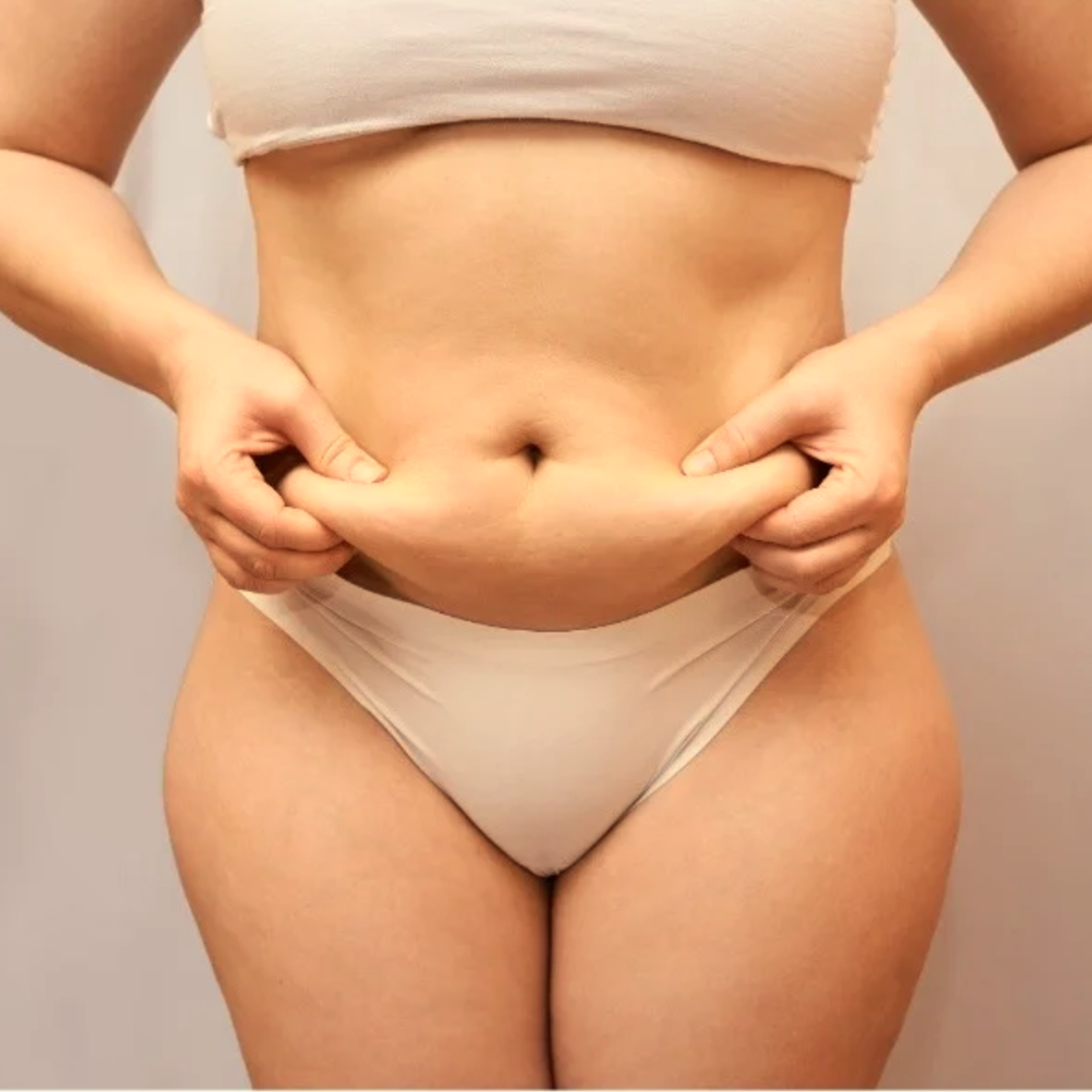
A tummy tuck treats excess skin and changes the abdominal contour. Planning may include the abdominal wall, depending on examination findings and individual indications.
- Liposuction and a tummy tuck address different aspects of body contour.
- Surgery leaves permanent scars, which heal differently from person to person.
- Pregnancy plans, weight changes and support during recovery are part of the decision.
Suitability depends on an individual assessment.
Talk to us on WhatsAppUnderstand the differences
Tummy tuck and liposuction: what is the difference?
Use this comparison to organise your questions. It does not determine which surgery is appropriate for you.
Suitability, risks and alternatives depend on an individual assessment.
- ASPS — Tummy tuck — institutional guidance.
- ASPS — Liposuction — institutional guidance.
The answers below retain their specific references. Institutional guidance and scientific studies serve different purposes; neither predicts an individual's outcome.
Skin, abdominal wall and contour
A tummy tuck can address excess skin and, when indicated, changes in the abdominal wall. Whether to treat diastasis recti or combine surgery with liposuction depends on examination and individual planning.
The value of a consultation
What we will discuss and assess
- What you would like to change about your abdomen, and your pregnancy and surgical history.
- Your skin, abdominal wall and the possibility of combined procedures.
- The extent of scarring, risks and support needed during recovery.
A consultation is a space to ask questions and explore options. Booking does not commit you to surgery.
Plan for recovery too
Surgery leaves scars and requires care and temporary restrictions. It is not a weight-loss treatment. Recovery should be planned around medical advice and your routine; there is no single timeline for everyone.
Suitability, recovery and outcomes depend on each case. Risks and alternatives will be discussed at your medical assessment.
An informed decision
Prepare your questions for the consultation
Skin, fat and the abdominal wall are assessed together. Diastasis recti and possible correction need to be discussed during examination; a technique cannot be chosen from a photograph alone.
- Is your concern the skin, volume or shape of your abdomen?
- Are you planning pregnancy or weight loss?
- Who can help with your daily routine during recovery?
Bring these questions to your consultation. You do not need to have chosen a technique beforehand.
Start with an assessment of your abdomen.
Book a consultation to understand the options and make informed plans for your next steps.
Talk to us on WhatsAppContact the team on WhatsApp for appointment availability and booking information.
Frequently asked
questions
What is the difference between a tummy tuck and liposuction?
Liposuction treats subcutaneous fat. A tummy tuck primarily treats excess skin and, when indicated, allows correction of separation in the abdominal wall (diastasis recti).
If the concern is localised fat with good skin quality, liposuction may be sufficient. With excess skin, fat removal alone may not address the concern. A protruding abdomen can also involve visceral fat, posture, diastasis recti or a hernia; appearance alone cannot identify the cause.
In a conventional tummy tuck, abdominal skin is repositioned and the belly button is usually brought through a new opening in the skin, remaining attached to its stalk. The exact technique varies; a mini tummy tuck and other approaches have different indications.
Lipoabdominoplasty combines treatment of fat and skin. Suitability depends on the extent of treatment and tissue blood supply, not simply the wish to address everything at once. Examination helps select the procedure that addresses the cause of your concern.
References
-
ASPS. Tummy Tuck Procedure Steps. Institutional guidance. View reference.
-
ASPS. Liposuction. Institutional guidance. View reference.
-
Hernández-Granados P et al. European Hernia Society guidelines on management of rectus diastasis. Br J Surg. 2021;108(10):1189–1191. DOI: 10.1093/bjs/znab128. View reference.
What is diastasis recti, and how does surgery correct it?
Diastasis recti is widening of the linea alba, the tissue between the rectus abdominal muscles. The European Hernia Society guideline uses a separation greater than 2 cm as a general definition, but treatment decisions do not depend on this measurement alone.
In a cohort of pregnant women, prevalence was approximately 60% at six weeks, 45.4% at six months and 32.6% at twelve months after childbirth. Figures depend on the assessment method and do not mean that all these women need surgery.
Treatment considers symptoms, function, time since pregnancy, excess skin and the presence of a hernia. Physiotherapy may be considered before surgery and may improve function and abdominal control; it is incorrect to say exercise never helps. Nor should it be promised to close every persistent separation.
When indicated, surgery can involve plication of the aponeurosis, bringing the midline structures closer together. This is not simply stitching the muscle bellies together. Associated hernias may need a specific repair.
Clinical examination and, when necessary, ultrasound help characterise the condition. Lower back pain or abdominal protrusion should not automatically be attributed to diastasis recti without assessment.
References
-
Hernández-Granados P et al. European Hernia Society guidelines on management of rectus diastasis. Br J Surg. 2021;108(10):1189–1191. DOI: 10.1093/bjs/znab128. View reference.
-
Sperstad JB et al. Diastasis recti abdominis during pregnancy and 12 months after childbirth: prevalence, risk factors and report of lumbopelvic pain. Br J Sports Med. 2016;50:1092–1096. DOI: 10.1136/bjsports-2016-096065. Prospective cohort. View reference.
Where is the tummy tuck scar, and will it disappear?
In a conventional tummy tuck, the main scar lies low on the abdomen. Its length depends on the skin to be removed and may extend towards the sides. There is usually also a scar around the belly button.
Some situations require different patterns. After major weight loss, for example, an additional vertical scar in an anchor pattern may be needed to treat excess in more than one direction. A single scar pattern therefore cannot be promised for every tummy tuck.
The scar is permanent. It may improve as it matures, but its width, colour, elevation and final position depend on tissue response and individual factors. Markings aim to allow clothing to cover it, without guaranteeing it will be hidden by every bikini.
Stretch marks and a caesarean scar can only be removed if they lie within the skin being excised. Others remain and may change position. The consultation explains what to expect and the trade-off between skin removal and scar length.
References
-
ASPS. Tummy Tuck Procedure Steps. Institutional guidance. View reference.
-
ASPS. Body Contouring Procedure Steps. Institutional guidance. View reference.
Can I become pregnant afterwards? What if I gain weight?
Pregnancy after a tummy tuck is possible, but its consequences should not be described as purely cosmetic. Obstetric care is important and should take the previous surgery into account.
A 2024 retrospective study found an association between previous tummy tuck surgery and preterm birth, with an odds ratio of 2.15 and a confidence interval of 1.48 to 3.13. This is an odds ratio in the study, not an individual probability or proof that surgery caused the outcome. Observational studies have limitations, and patients differ.
Pregnancy may also change the skin, contour and abdominal wall repair. If you intend to become pregnant soon, postponing surgery is often reasonable. Becoming pregnant afterwards does not mean a complication will necessarily occur.
Large weight changes can also alter the outcome. Planning considers your current health and reproductive and weight-loss plans, without treating surgery as an absolute barrier to pregnancy.
References
-
Cheng CC et al. Perinatal outcomes following abdominoplasty: a retrospective study and review of current literature. Am J Obstet Gynecol MFM. 2024;6(4):101331. PMID: 38447678. View reference.
-
ASPS. Tummy Tuck Procedure Steps. Institutional guidance. View reference.
When can I stop wearing compression garments or have drains removed?
Drains: when used, removal depends on the volume and appearance of drainage and assessment of the area. Timing varies from a few days to longer and should not be decided by a date alone. Some progressive-tension suture techniques may reduce the need for drains, but their use or absence alone is not a measure of quality.
Compression garment: the style, fit and duration depend on the protocol and your recovery. Wearing one for around 4 to 6 weeks is a clinical reference used in some practices, not a universally proven duration. The garment should not cause breathing difficulty, excessive pain or skin injury.
Evidence does not establish that compression always reduces swelling or prevents seroma. A randomised trial involving 32 patients after a tummy tuck did not demonstrate the expected benefit of compression and found smaller abdominal circumference measurements in the group without a garment from 35 days during follow-up. Both groups received lymphatic drainage, and the sample was selected. This does not prove no patient can benefit either: it highlights the need for individual decisions.
Do not adjust pressure, stop wearing the garment or remove drains yourself. Follow-up guides changes and checks for fluid accumulation or healing problems.
References
-
Moraes BZF et al. Do Compression Garments Prevent Subcutaneous Edema After Abdominoplasty? Aesthet Surg J. 2023;43(3):329–336. PMID: 36282895. Randomised trial. View reference.
-
ASPS. Body Lift Recovery. Institutional guidance. View reference.